Amazon Books: A Second Visit with Friends

In March, my friend Robyn and I started a meet-up in Portland for book publishing professionals. There is a great mix of folks in town who work in all different nooks and niches of the industry. Some of us know each other, but we rarely have a reason to get together and talk shop. We’re hoping to solve that.

This weekend, our group took a field trip to Amazon Books at Washington Square, just outside Portland.  This store was the second store to open. They now have over 15 stores open and almost 50 pop-up locations around the country. We made the trip because many in the group hadn’t visited one of the Amazon stores yet.

I wrote about my visits to stores in 2017, so I don’t want to repeat too much of that review but let me share some of the group’s observations from the visit:

  • There was a generally agreed upon feeling that it felt like “a showroom for books”. All of the big books in all of the categories were represented. If you had a popular series like Game of Thrones, all the books were there in their signature face out, cover view on the shelf.
  • A more cynical way to describe the store would be as “a place for people who don’t read”. It was be hard to go wrong with the selection they have in the store.
  • The opposite side of that is that you didn’t feel like you were going to find new or edgy or out of the way titles that book nerds would be on the look out for.
  • The selection in the store is 100% determined by headquarters. One of the bookcase descriptions said they used customer ratings, pre-orders, sales and popularity on Goodreads. Another bookcase was a selection of books that has been read on the Kindle in three day or less.
  • Every book has a placard with the title, author name and a customer review from Amazon.  A few didn’t like them on every book. A few of us observed that with the books face out, we were much more likely just to pick up the book rather than read the signage for each book.
  • A favorite transposition from the online to the physical was the “If you like this, you might like that…”. There were a number of bookcases through out the store stocked in that configuration.
  • Two people in the group bought books in the store.  With an Prime membership, you get the same price as the online store.  If you used a credit card stored in your Amazon account, they auto-magically looked up your Prime eligibility.
  • At the checkout, there was a upsell offer for either 30 days free of Amazon Music or two free audiobooks at Audible.
  • It appears they sell alot of Prime memberships in the store with people wanting to get the discount at checkout and then use all the other benefits that come with it.
  • The electronics section with Alexa, Kindle and Fire takes up about 20% of the store but not many people were interacting with the devices.

The store was fun to explore with like minded folks. Glad we did it.
Making Books

I had lunch yesterday with a writer in Portland who works with authors.

Davia is great. She thinks big. She tries to draw out the best from the author and what will most help the readers. It was easy to talk shop for two and a half hours over chicken kebabs. The conversation centered around three projects and each existed across the range of feasibility.

The first project was ill defined. There was no one sentence description. Neither of us could get a sense of what would fix the problem. We spent the most time talking about this one and made the least progress.

The second project was promising but it also existed in this fuzzy realm. This author could write any of several books but none of ideas reflected who they were. We later exchanged emails on a concept they all had in common. It felt like the right book, but it was the one that was going to take craft and care to write.

The third was already done. The topic was timely. Demand would only grow over time. The author had credibility. The only question was how fast could it be written.

Books are a strange amalgam of author, idea and zeitgeist. Three months from now all of these books could be in different places, better or worse. It makes the work infinitely interesting and equally frustrating at times.


Influence

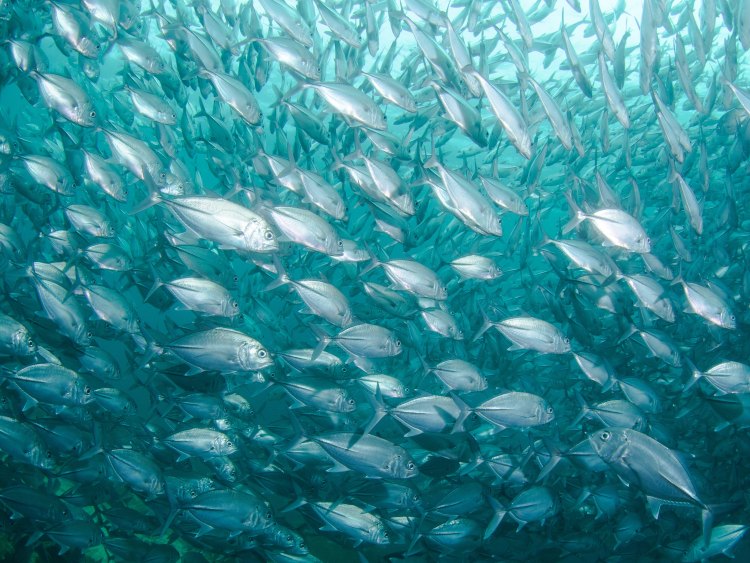
jean-wimmerlin-528459-unsplash

Photo Credit: Jean Wimmerlin

Jens Krause studies the flocking behavior of animals such as birds and sheep.

By observing schools of fish, Krause, with his collaborator Ashley Ward, developed a theory involving what they call quorum responses. In small groups, a single leader could dictate the direction of the group, but as more fish were added, more leaders were required to determine the direction for the group.

In 2008, he published a paper suggesting an additional set of animals—humans— followed a set of behaviors similar to those of the others he studied. At the prompting of a German TV station, Krause ran an experiment to see if humans displayed similar behavior.

The study put two hundred volunteers in a convention center and gave them three rules:

  1. Don’t talk to anyone
  2. Walk slowly
  3. Stay within arm’s reach of one person in the group.

With that, the group was told to wander freely within the constraints of the given rules. In every test they ran, the group formed two concentric circles.

Krause ran a second experiment with a slight alteration. Keeping the same three basic rules, the researcher pulled aside five people and asked them to walk toward a target on the far side of the room.

The small group, which made up 2.5 percent of the overall, arrived at the target with the rest of the volunteers in their signature concentric circles. Krause added five more people to the target seeking group, raising the overall amount to five percent. With that small change, the entire group of two hundred arrived at the target.

What’s amazing is the power of a small group to influence a large group even when the minority is acting individually and without knowledge of one another. Krause says that when information is scarce, a small group of people can become “disproportionately influential” until the information has spread. Our participation in many social networks decreases the likelihood of complete obedience to the desires of any single group, but Krause’s research shows how we might create information cascades for our startups, situations where people observe others and make the same choice as the group, independently of their own personal knowledge.

Thresholds clearly exist for when a few can influence the many.

Author’s Note: Please read Nick Bilton’s great book I Live in the Future & Here’s How It Works. His Chapter 4, “Suggestions and Swarms,” talks more about Jens Krause’s research.

What I Read – April 2018

377594._SX1280_QL80_TTD_


Non-Fiction

Stick with It by Sean Young – The book has all the components of a great business book, opening with strong frameworks to think about change.  From there, he pushes back on the recent popularity in “habit” books but there isn’t enough contrast for me to see what is different about his approach.  The framework started to feel familiar. The stories are good, but I found him repeating material in places. I really wanted to like it more than it did. Could.

Fiction

The Mighty Thor: Thunder In Her Veins by Jason Aaron and Russell Dauterman – I just finished reading Aaron’s run on Star Wars and decided this would be a great place to follow him to.  I loved it. Jane Foster lifts Mjolnir and takes up the mantle of Thor. This first volume finds her trying to keep peace in the Nine Realms as she battles Loki, Odin and the cancer killing her mortal body. Must.

Three Lessons From Music

Amplify

I was listening to Daniel Glass today at Bob Lefsetz‘s Music Media Summit. His fourty year career with labels in the music industry is marked with hit artist after hit artist. There were misses too. He talked about making bad picks on what seemed like good bets. Yesterday, it was Troy Carter, who managed Lady Gaga through her rise to stardom. Bob did a good job with the interviews but you still had to listen close. There were faint patterns in both stories.

I heard focus. Gaga had been dropped by her label when she started working with Carter. It was his only act. Glass’ first act at Glassnote was Secondhand Serenade and he poured everything into it.

I heard quality. People wonder why records (that is the word they used) don’t work and it’s because they are not good records. They aren’t hits. Both of them talked about the tension and the honesty needed to make great music. You need producers. You need musicians. Glass tells artists to stay in the studio until they find it.  He then tells them to test the songs live with an audience. Mumford and Sons have been play new stuff for a year at their concerts and Glass is just hearing it now as they make the next album.

I heard amplifying. All artists should build relationships with their fans. There is a line of thought that says the indie route is enough. I believe to scale an idea that there are many well worn paths in each industry and people who have spent decades walking those paths who can help. Those sales, publicity, marketing and promotion people can open doors that most artists can’t. Glass talked about the key radio stations he needed to convince to get the airplay needed to launch a new track. I have heard people say that you are just renting those roldexes and in the long term you don’t gain anything. That might be true but the right connections can give immediate power to an artist’s idea in a way they can’t do themselves.


Different Ways to Look at Book Business

Last summer, one of Bob Lefsetz’s emails arrived in my inbox. I like Bob’s take on music, the music industry and culture in the broadest sense. I don’t always agree and on this morning, I found myself in that position.

Bob was writing about books and the myriad mistakes that the publishing industry was making:

Now I’m hesitant to recommend books unless they’re slam dunks. In a short attention span economy people want to go deep, but to get them over the hurdle, to get them invested in a book, is a huge step. Meanwhile, the inane book industry is doing is best to kill the Kindle, with readers and bookstores singing hosannas, not realizing they’re relegating themselves to second-class citizens in the digital economy where we all live. Music revenue goes up with streaming and publishers believe by charging more for digital books they’re winning. That’s why Kindle sales are off. Used to be all digital books were under ten bucks. Makes sense, doesn’t it, with no printing and no shipping and no returns? But now, oftentimes the paperback is cheaper than the digital equivalent. ON AMAZON! People pay attention to price. And they’ll pay for convenience, but not if they think they’re being ripped-off, and this just sticks in my craw. T-Mobile revolutionizes the mobile business with competition, by lowering prices, but the publishers are a cabal supporting unrealistically high book prices to their detriment. And ours. And now I’m off on a rant, but no one is more self-satisfied than those who work in the publishing industry. The only reason they can survive is because there’s so little money in it. If there was any cash, Silicon Valley would swoop down and disrupt them. Which is what Bezos tried, instead he’s now revolutionizing news with the “Washington Post” and voice-activated computing with the Echo. If someone is not turning over bricks in your space that means you’re too far from the mainstream.

End of rant. Because now I’ve lost all the readers, because they love their physical books, and the non-readers, because they don’t give a shit.

Not sure what posessed me that morning, but I felt I could respond to his rant with my experience from the world of book publishing. For some of his more popular posts, Bob will send a follow-up with a collections of the responses he receives.  The next day he shared my response and unless you subscribe to his newsletter, you never saw it.

Bob,

Long time listener, love the show.

I have worked in book publishing for the last 15 years and have played in just about every role of the ecosystems – author, agent, editor, publisher, bookseller, foreign rights. It’s been a trip to watch all the change over that time and I don’t think that change has the same effects across all media industries.

Your rant about books, digital and pricing is one near and dear to my heart. Here is my take.

Most book publishers look at the world as one of scarce attention.  They use price discrimination as their mental model for how the economics of the industry should work. They think they sell a product with a limited shelf life, like a baker or cruise ship company.  Release the expensive hardcover, followed by the less expensive paperback, followed by the now largely retired mass paperback.  This creates high profits early in the cycle for the people who really want the book and attempts to open up other segments of demand as the price goes down. Since most books don’t sell many copies, they are doing their best to maximize profit early in the sales cycle.

You and Amazon share the worldview of price elasticity – if you lower the price, more people will buy it. I have run experiments with publishing projects and found this is true.  Lower prices sell more stuff. Here is the trick: Can you sell enough volume to make up for lost margin?  If you are selling a Top 100 title, I think the answer is yes.  For the thousands of other books in the long tail, this is the wrong answer and you can’t make the margin up on your hits.

Subscription services are the end game of a world of price elasticity.  Books are different animal though.  I can watch an entire season of Orange Is the New Black in the same time it takes to read the latest from Stephen King. Most people read one or two books in a YEAR. True readers might read ten to twenty books in 2017. Having a thousands of books to choose from and pay a monthly fee doesn’t make sense to even the one percent of readers.

And higher prices didn’t kill digital books. Yes, sometimes, I like to press a button and being able to start to read a book now.  Others like their books in the cloud rather than on a shelf. Turns out only 10% of the market has those needs right now. The screens that most people use (phone and laptop) are not great for reading. Research shows people read slower on devices. The 550 year old codex format is still a better device for the vast majority of people who like to read books. This is a technology problem. Maybe something like VR gives us a better way to read books.

Look for the market to move to shorter books with shorter chapters to fit better into our widely varied, time segmented media life.  You already see this in YA and business.

Thanks for listening.

It feels like a good day to share all of that. This morning, I flew down to Santa Barbara to attend Bob’s Music Media Summit.  I am here to listen to folks from a different segment of the media business and hear how they are dealing with the shifts and changes in the business of music.


My First Day

todd headshot 2016
Today marks my first day at an old job.

After five years away, I am returning full-time to Astronaut Projects, my publishing studio based in Portland, Oregon.

IT Revolution has been a great home. I have so much gratitude for Gene, Margueritte, and the whole team for my time at ITRev.

The Phoenix Project started as a novel for technology leaders that we launched as a self-published book on Amazon in 2013. With each indicator of success, we iterated. We first released the title as a hardcover and an ebook, followed that with a paperback edition and then an audiobook. We followed that with The DevOps Handbook and titles by other authors in the technology community. In my time there, we sold over 500,000 copies of our books.

2017 kept nudging me in a new direction. My trip to India nudged me. Our family trip to Europe over the summer poked me. My 46th birthday elbowed me.

Many things, big and small, kept pointing me to focus back on my own business.

So, here I am, on my first day back as excited as ever.  With new beginnings, you never know where they will lead, but I do know my future is with authors, books and readers.

I help experts create better books and grow their businesses.

If you are thinking about publishing a book, I can probably help. Let’s talk.

What I Read – March 2018

Non-Fiction

Attached by Amir Levine and Rachel Heller –  The premise of Attached is that there are three ways people engage around intimacy – Secure (50% of us), Anxious (20%), and Avoidant (25%).  And the trick is what happens when these styles interact with each other. This is book is interesting but is short on utility; felt like a long magazine article that got turned into a book. Could.

Great At Work by Morten Hansen – Through a 5000 person study asking bosses, peers and the the individuals themselves, Hansen believes he has found a set of strategies and tactics to improve your performance in the workplace. Here are four lessons that caught my attention:

    1. We are always balancing focus and effort. The best performers focus on a smaller number of priorities and then obsess, scoring 28% higher than the next closest group that does more and stresses about the added commitments. Ways to apply – focus on an industry, cull the number of projects, learn to say no.
    2. High achievers find a way to bring individual passion to their work and purpose that serves the broader community. The study found passionate people in all jobs and industries. It also found purpose in highly creative to the most low paying positions (hospital janitors score among most purposeful). The best result came from individual who had BOTH.
    3. When leading groups, maximize debate among team members, reach selected action and foster team unity toward end goal. Make it safe to speak up, ensure everyone is heard and get everyone behind the final decision.
    4. Collaboration is not magically better. It only makes sense when it is effective and creates value towards an end goal. Top performers find that balance and fully commit or they say no.

I give Great At Work a Must.

The Million-Dollar One-Person Business by Elaine Pofeldt – Pretty standard book for starting a business.  Pofeldt is a journalist and she is reporting on the current scene. Could.

Fiction

Traveler’s Gift by Andy Andrews – I have been reading business fables and parables ahead of a new project I am working on. The book came out in 2002. I wasn’t familiar with it until recently. The main character, David Ponder, hits a rough patch in his life and has a George Bailey moment of crisis. In this version, Ponder is sent through time to visit famous figures at pivotal moments in history to receive words of advice. The opening scenes are rushed but the rest of the book works. Could.


Graphic Novels

She-Hulk: Deconstructed by MarikoTamaki and Nico Leon with Dalibor Talajić – Jennifer Walters aka She-Hulk attempts to return to a normal life as a lawyer after the events of Civil War II. Their treatment of someone struggling with PTSD is matched so well with the green monster. It’s all there – anger, fear, lack of control, remorse, consequence, exhaustion.This is one of the best story arcs I have ever read in a graphic novel. Must.

Other

Launch Podcast by John August – August is the author of a new middle-age novel called Arlo Finch and the Valley of Fire. He is also the co-host of the Scripnotes podcast and the screenwriter of many movies you know – Go, Big Fish, Charlie’s Angels. Launch tracks the journey of the book being published from finding an agent to copyediting to visiting the printing plant in Virgina. The podcast is a fun overview of the whole process. I think even publishing people will enjoy hearing the story told through the eyes of an enthusiastic first time author. Should.

Black PantherMUST for all the reasons.

Meru – Amazing documentary on Netflix about three men’s attempt to be the first to ascend a peak in the Indian Himalayas. My wife and I sat on the couch amazed when it was over. Must.

What I Read – February 2018

Non-Fiction

Tribe of Mentors by Tim Ferriss – This is my favorite book by Ferriss. Drawing from his podcast, he compiled a list of interesting questions that he asked a set of interesting people. Here is a sampling:

  • What books have you gifted the most to other people?
  • What are some unusual habits you have?
  • What $100 purchase has most improved your life?
  • What would you put on a billboard?
  • What is your favorite failure?

That structure made the book a page turner for me. I have a file with 12 pages of notes I took while reading the book. Must

Radical Candor by Kim Scott – Scott spent time at the world of startups, Google and Apple University.  Radical Candor is her take on the most effective way to manage and communicate with employees. I liked it. There are some solid frameworks for people to us. I was reminded of Fierce Conversations by Susan Scott and the needed combination of compassion and honesty. My takeaway is asking new employees to tell their life story by starting early in the childhood and looking for moments of change; those moments often illuminate values that are important to them. My only critique would be that it felt long and a little heavy on explanation.  Should for any manager, Must for new managers.

Spiritual

Don’t Be A Jerk by Brad Warner – This is a brave book. Brad chooses to translate and paraphrase the first section of Dogen’s Shobogenzo, the definitive work of the founder of Zen Buddhism. The book covers the first twenty four chapters with each fascicle getting a short introduction, the paraphrased material and a further expansion. This is also a wonderful book because it covers Japanese history, ancestors back to India, the attempts at translation, and he shares his path of learning Zen. I have been practicing for seven years and the book felt like an advanced class on my Zen Center. Must (and there is follow-up called It Came From Beyond Zen!)

Graphic Novels

Star Wars by Jason Aaron, John Cassaday and many amazing others – This series started after Disney bought Lucasfilm and turned the comics over to its previous acqusition Marvel.  Aaron envisioned the series as a running sequel to Star Wars (IV). I have read the first five volumes and it is outstanding. Luke is lost and searching for traces of the Jedi. Leia and Han don’t get along. Vader is trying to find the lucky kid who destroyed the Death Star. There is no shortage of themes to explore and new characters to sprinkle in. The trade paperbacks to a rare outstanding job of pulling together crossovers into solid story arcs. Read them in this order: Skywalker Strikes, Showdown on Smuggler’s Moon, Vader Down, Rebel Jail, The Last Flight of the Harbinger, Yoda’s Secret War, The Screaming Citadel, Out Among The StarsMUST! 

Star Wars: Doctor Aphra Volume 1 by Kieron Gillen, Kev Walker, Marc Deering and Antonio Fabela – I heard buzz about the Aphra title and it didn’t live up to the hype for me. Aphra is a thinly veiled female version of Han Solo with (yes) a Wookie and (evil) droids. My real objection is my personal preference to read stories about heroes that are trying to make their world a better place; Doctor Aphra is not that. Skip

Invincible Iron Man: Ironheart Volume 1 and Volume 2 – I like Riri Williams. She’s smart. She is African-American. She has opinions. Tony Stark is hanging around as a amorphous AI. We get a “figuring out how to be a superhero” storyline, reminding me of Kamala Khan’s Ms. Marvel.  It got weird though when she took over a country without any complications. Wished there was more that defined her as a unique character, from the genius persona. Could/Should.

Other

Altered Carbon – I read a few early reviews for the new Netflix series and wondered if I should watch.  I ignored the critics, watched and I am glad I did. Yeah, there is the violence and nudity, but the story is interesting and complicated and it moves fast across the ten epsiodes. Ignore the reviewers if you like sci-fi (and watch after the kids go to bed). Must.

Lorne Stories from WTF podcast with Marc Maron – I am fascinated with Lorne Michaels and the makings of SNL. If you haven’t listened to the show, Maron tried out for SNL, and fixated about it for years. Most of these interviews took place before Maron finally interviews Lorne Michaels for the show. The most interesting thing about listening more than twenty people talk about Lorne is how much their stories are reflections of who each of them are as people. Should.

The Chemicals of Happiness

Loretta Graziano Breuning says there are four chemicals that produce happiness in our brain.

  • Dopamine produces the joy of finding things we seek
  • Endorphin creates oblivion that masks pain
  • Oxytocin creates the feeling of being safe with others
  • Serotonin creates the feeling of being respected by others

All of these chemicals are produced and released the limbic system, a mammalian system in our brains made up of structures such as the amygdala, hippocampus and hypothalamus. The limbic system reacts quickly and claims to know what is good and bad for you. It makes sense between pleasure and pain.

The cortex is the part of the brain associated with primates and most evolved in humans. This much larger section of the human brain is the thinking, processing part of our mind. They are not involved in chemical production or the release of those chemicals.

Our work with being happiness requires us to work on those lower level systems, given the enormous effects those chemicals have on our mental well-being.

What I Read – January 2018

I haven’t posted any entries to my What I Read series in about six months. The main reason is I was doing an enormous amount of research on my #happier project. I didn’t want posting my source material to give away the pieces I was working on. To kick things off again, I am going to share several books I read.

  • The Happiness Advantage by Shawn Achor – This was my favorite book, mainly beacause it took a “business book” approach to the topic. Achor focused on how managers could work with employees better using the happiness research. Must
  • The How of Happiness by Sonja Lyubomirsky – This book showed me the depth of the research that has been done and convinced me I need to read more.  The pitch for this book is “Happiness is hard to maintain, but here are the reliable things you can do to improve your overall happiness.” Must
  • Love 2.0 by Barbara Fredrickson – From the book – “To put it in a nutshell, love is the momentary upwelling of three tightly interwoven events: first, a sharing of one or more positive emotions between you and another; second a synchrony  between your and the other person’s biochemistry and behaviors,; and third a reflected motive to invest in each other’s well-being that brings mutual care.” Must
  • Thanks! by Robert Emmons – Emmons is the leading researcher on gratitude and gratitude is one of the most reliable ways to become happier. Recognize the benefit, acknowledge receiving it and return the favor. Should
  • Happier by Tal Ben Sahara – Out of his many books, this one is the best at covering the research and some different mental frameworks for happiness. He also does a good job of drawing on prior applicable research in things like self-esteem. Should
  • The Power of Meaning by Emily Esfahani Smith – The author was headed in the right direction but didn’t land it. I am still recommending it because this topic of finding purpose and meaning to so important for everyone. Could
  • Solve For Happy by Mo Gawdat – I don’t agree with everything that Gawdat says but the chart on page 134 is worth the price of the entire book. Could

Emotions Chart - Mo Gawdat

#YEARINREVIEW 2017

In 2010, Seth Godin asked people to make a list of what they shipped. I did the exercise in 2010, 20122013,  20142015 and 2016. I have come to believe that this is a important exercise, especially for entrepreneuers to see what they have accomplished.

What did I ship this year?

And I helped 16 Kickstarter projects make their way into the world.

Happy – Short and Long

Philosophy has been working on questions of the mind and meaning for centuries. The thinkers and their analysises are too numerous to count, but for the discussion of happiness, let’s consider two school of thoughts.

As early as the Eygptians, philosophers believed that pleasure should be the primary and proper purpose to human life. Greeks used their word hedonia or ‘delight’ to describe it. Today, we still describe self-indulgence pursuits and behavior as hedonistic. Freud called it “the pleasure principle” and said it provided, in the words of Howard Cutler, “the fundamental motivating force for the entire psychic apparatus…to relieve the tension caused by unfulfilled instinctual drives.”

With time, the Greeks advanced the idea of happiness further. Aristotle said singularly pursuing pleasure was vulgar. He believed activity needed to be measured against virtue. The Greek word he used was ‘eudaimonia’, often translated as ‘welfare’ or ‘happiness’. The word, translated literally, means “good spirit” and more recently as ‘human flourishing’. This is the approach Martin Segilman, the father of positive psychology, has advocated in his most recent work, in a effort to bring a greater whole to the discussion of happiness.

Robert Lustig, an endocrinologist and professor at UC-San Francisco, believes the duality is driven by the neurotransmitters in our brain. He associates dopamine with pleasure and desire, flooding the brain following a rewarding stimulus.  Dopamine helps us take action toward goals but can also trap us in addiction. On the other side, seratonin in the brain functions to create longer, sustained happiness. In one description, the chemical was described as helping people feel important and significant. That might explain serotonin’s association with both gratitude and depression.

In The Art of Happiness, The Dalai Lama distinguishes between these two schools in a different way. He says pleasure is unstable–“One day it’s here, the next day it is gone.” It’s sex, drugs and Rock ’n Roll. Real happiness, he says, is persistent and stable. It remains through the inevitable ups and downs that make up life. Where the pursuit of pleasure move us further away from life, real happiness moves us towards life and make us more receptive to what is always there.

As with most everything, it is not about seeing these competing or distinct. We experience intense pleasure and long for lasting happiness. The practice is to working with both equally.

#happier

Failing to Express Gratitude

Gregg Krech is a leading expert on Japanese psychology and the author of Naikan: Gratitude, Grace and the Japanese Art of Self-Reflection.

In the book, Krech shares a list of 11 reasons why we fail to express gratitude:

  1. Misdirected attention – Just failing to notice what is given.
  2. Lack of Reflection – Not taking a moment.
  3. Others must “know” how grateful I am – Don’t take for granted, especially with those close to you
  4. Procrastination – Don’t wait.
  5. Forgetting – Don’t let the moment pass.
  6. Laziness – Make the effort.
  7. Entitlement – No matter the circumstance, others help.
  8. People were doing their job – You still benefit, say thank you.
  9. It’s wasn’t much trouble – Receiving any gift is justification enough.
  10. Later trouble or difficulty – The benefit exists separate from anything else that comes.
  11. An unknown giver – Honor the gift even if you don’t know the source.

A list like this helps us see many things that get in the way of being thankful.

#happier