Somebody Has Written That Already

The first roadblock to innovation is “Somebody has already done that.”

I used that phrase as a prospective publisher rejected a book proposal I had written and suggested an alternative approach. I told them the simpler concept had already been done many times.

His response was “That’s true, but if you get it right, you own the category.”

Will Weiser’s suggestion and nudge was the impetus that created The 100 Best Business Books of All Time. And he was right. There was a market.

This question of copying an idea that already exists comes up a lot in book publishing as we make choices about what to write and what to publish. A blog post over at Whittle Idea suggests a another question to consider when faced with these situations:

Drew Houston, founder of Drop-box, pitched the idea of file sharing across computers to a bunch of investors. The leading objection was “there are many file sharing services out there”.

Drew Houston turned to an investor who dismissed the idea & asked “Do you use any file sharing service?”. The answer was “No”. In the following discussion, he established that prospective users were not yet taken.

That is how you find if the idea is already taken – by checking if the prospective users are already taken.

If prospective users are still available, the idea is still available. If the need is real, all you need is to reach and resonate with those users, in a way [others] could not.

If someone would have asked me if I bought any of the other books on the market, I would have said no. There were more readers out there. In our case, we have outsold any other book in our segment by a ratio of 3:1.

There is a risk of misusing this question if you only ask yourself but if you are talking to potential customers it is a great qualifier to see if a market is still in play.

Idea Arena Podcast – The Lean Startup with Eric Ries – Part II

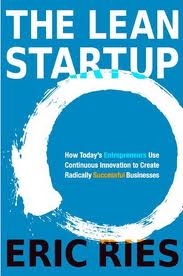
In this second part of a two episode interview, I talk with Eric Ries, serial entrepreneur and author of The Lean Startup: How Today’s Entrepreneurs Use Continuous Innovation to Create Radically Successful Businesses.

The focus of the second part of this interview is Eric’s views of book publishing and what changes he would recommend in applying the lean startup methodologies to the industry. This segment will be of particular interest to publishers looking to apply agile methodologies to their businesses.

Part II of the interview is 49 minutes.

P.S. You might also enjoy Eric’s keynote from O’Reilly’s 2012 Tools of Change Conference

Aristotle on Pitching

The Greeks had the idea of pitching figured out long ago. Aristotle talked about the concept in Poetics, though he wasn’t thinking about selling to customers. Aristotle was concerned with the construction of literature, in particular tragedy, and with how people often end up in a state of misery and then find a way back out. The three–act story we know and love is built on this idea.

  • Act I: Girl Meets Boy
  • Act II: Girl Loses Boy
  • Act III: Girl Gets Boy Back

The reason we watch movies and read novels is to follow along with the characters to see what they will face and how it will change them. Loss and its cousin, absence, are the most common tensions in literature. The character discovers early in the story that something is missing—happiness, freedom, wealth, beauty—and that he or she needs to fill the hole in his or her pocket or heart—someone has a felt need that needs to be resolved.

A pitch is just a 30–second, three–act play that describes the current state, makes apparent the unsatisfied felt need of the customer, and shows how that need might be fulfilled by the work of your startup. As Y Combinator co–founder Paul Graham says, startups need to improve people’s lives and bring about some change for the better. If writing your pitch is hard, go back and find the poetic tension that drives the story of your company.

This is an excerpt from Chapter 5 of Every Book Is a Startup that ran in this week’s edition of O’Reilly’s TOC Newsletter. If you are going to be attending TOC in New York next week, I am going to be speaking on Minimum Viable Publishing in a workshop session Monday February 13th from 3:30pm to 5pm.

The Five Universal Themes of Business

What happens when you spend 18 months reading the best in business literature? In our case when The 100 Best Business Books of All Time, two things happened—one expected, the other quite unexpected.

The expected was the creation of the list that made up The 100 Best Business Books of All Time, a book that was published in 2009 (and whose updated paperback edition was just released).

The unexpected came as we uncovered a number of meta-themes the books share that exist beyond any predictable grouping by subject matter. For example, Michael Useem’s The Leadership Moment has surprising connections with as Taiichi Ohno’s Toyota Production System and Gary Klein’s The Power of Intuition.

Ultimately, we found five persistent meta-themes across our selection of the 100 best business books. Each meta-theme appears horizontally across traditional publishing categories, bridging such divisions as sales, management, narrative, and finance. Each meta-theme also scales in a vertical sense, applying to individuals, teams and organizations equally.

So profound are these meta-themes, we argue, that these five universal insights act as the foundation for anyone dealing with any aspect of business, whether starting a new job or developing the next year’s corporate strategy.

  1. Clarity of Purpose: Purpose provides direction and brings clarity to all work. For the individual in pursuit of purpose, author Po Bronson asks the ultimate question in his book, What Should I Do with My Life? Organizations struggle with the same kind of question when they craft their mission statements and massage their marketing slogans.
  2. Wisdom in Decision Making: The process of making decisions is often overly deliberate or completely unconscious. In both cases, we base our decisions on past experience and judge our successes only on the outcomes. In Influence, Robert Cialdini alerts us to how we use unconscious routine to make even the smallest decision, while in The Power of Intuition, Gary Klein provides a map to some of that scripting and shows how we can improve our gut instinct.
  3. Bias for Action: Tom Peters and Bob Waterman pointed out in In Search of Excellence that a quality of excellent companies was “the bias for action.” This assertion that action trumps all appears in many great books, so what keeps us from taking action? Author David Allen (Getting Things Done) would say a person’s focus is misplaced on time and priority, rather than action. Authors Jeffery Pfeffer and Bob Sutton (The Knowing Doing Gap) would say organizations suffer from a gap between knowing and doing.
  4. Openness to Change: Understanding change is essential because change affects individuals and organizations constantly. Sales is about change. Marketing is about change. Corporate strategy about is about change. Lou Gerstner says it was changing IBM’s entitlement culture that was his biggest challenge. In The First 90 Days, new job guru Michael Watkins describes the waves of change that new managers must create. In Crossing the Chasm, Geoffery Moore shows how products are adopted and what different constituents need to accept change.
  5. Giving and Getting Feedback: Imagine throwing a baseball in a dark room. Imagine not being able to see the trajectory the ball took or where it landed. Our success depends on feedback. Did we make the right choice? Did the action have the intended effect? Are things changing? Daniel Goleman (Emotional Intelligence) says self-reflection is a form of feedback and an essential piece of emotional intelligence. Engineering professor Henry Petroski, author of To Engineer is Human, says failure is a critical part of learning. And in Secrets of Closing the Sale, Zig Ziglar says listening is the most important part of selling.

These five meta-themes are not only important on an individual level, but they also overlap and reinforce one another. For instance, Peter Drucker said in The Effective Executive that decisions are not truly made until someone is doing something different than they were the day before. And it is clear that feedback determines the success one has with any and all of the other meta-themes.

The five meta-themes feed into each other as well. Clarity of purpose provides wisdom in decision-making, which informs action, which creates change, while feedback makes everything work better. They also resonate with the stages of the “hero’s journey” made famous by mythology scholar Joseph Campbell. The archetypal heros of myth and popular culture walked more or less the same path as Jack Welch.

It’s painfully obvious that companies continually fail to absorb these simple lessons. The question is, what will it take for us to internalize the insights won by our heroes?
Groundhog Day Gift for 2012

On On February 15, 2011, I wrote a post called Every Book Is A Startup. I talked about how books were entrepreneurial endeavors and that authors need to think more in these terms. I have discussed this idea with hundreds of authors over the years, but never quite articulated the problem in that manner before.

I never expected, a year later, that idea would become a book with O’Reilly’s Tools of Change, an experiment that embodied the virtues of entrepreneurial publishing, or a way to frame a set of ideas that is desperately needed in the world of book publishing.

Now, today happens to be my favorite holiday–Groundhog Day. Can you think of anything better than looking to a small woodland creature to determine the prospects for the remaining days of winter? And let me also say, I was a fan of Punxsutawney Phil long before Bill Murray got caught in his temporal loop of bad karma.

I decided a few years ago to start offering a gift on this glorious day of the groundhogs. In 2010, I published a short ebook called Fixed to Flexible that offered a variety of ways to think about pricing in the 21st century. Last year, I posted a set of sketches called Pricing Pictures that showed you can do more than just change what you charge.

This year, I have uploaded the first two chapters of Every Book Is a Startup to Scribd for you to read and share.

In this opening section, you’ll learn about black swans, long tails, and the one thing that every publishing startup must find to be successful.

Thanks as always for reading and Happy Groundhog Day!